

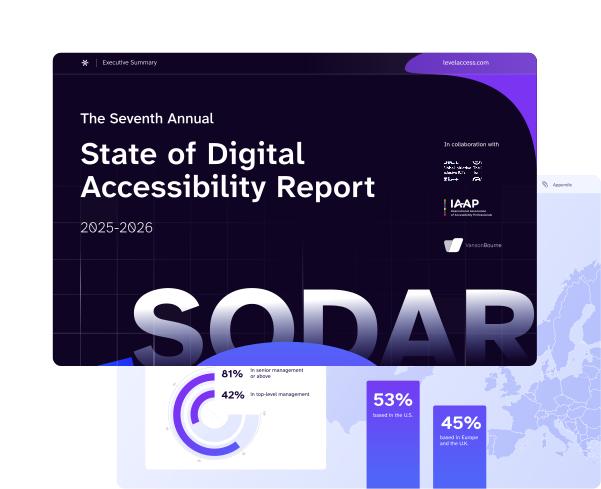
The Seventh
Annual State of Digital Accessibility Report: 2025-2026

Market research
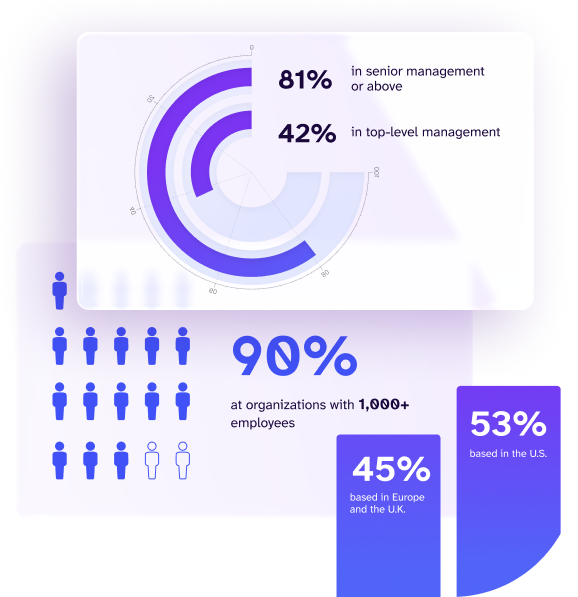
Our annual market research report provides data-backed insight on key trends shaping the digital accessibility landscape. Learn what more than 1,600 digital experience professionals across North America and Europe have to say about the state of their accessibility programs, and the tools and strategies moving the needle.
Digital accessibility
drives business outcomes
Professionals today recognize that the value of digital accessibility extends beyond compliance.
-
91%
say digital accessibility improves user experience (UX). Better UX can boost engagement and conversion.
-
90%
say it improves customer satisfaction. This drives loyalty and expands market reach.
-
88%
say it improves brand reputation, which can deliver a long-term competitive advantage.
-
81%
say it improves customer retention—which translates to more sustainable growth.
Contribute to our 2026-2027 report
Your experience can inform our next State of Digital Accessibility Report. Share your perspective in this year’s community survey to help your peers benchmark accessibility progress. It’s fully anonymous, and you’ll get the opportunity to enter a giveaway for prizes—including $100 Amazon gift cards and IAAP certification waivers.
 Survey
Legal risk looms
large as regulatory deadlines approach
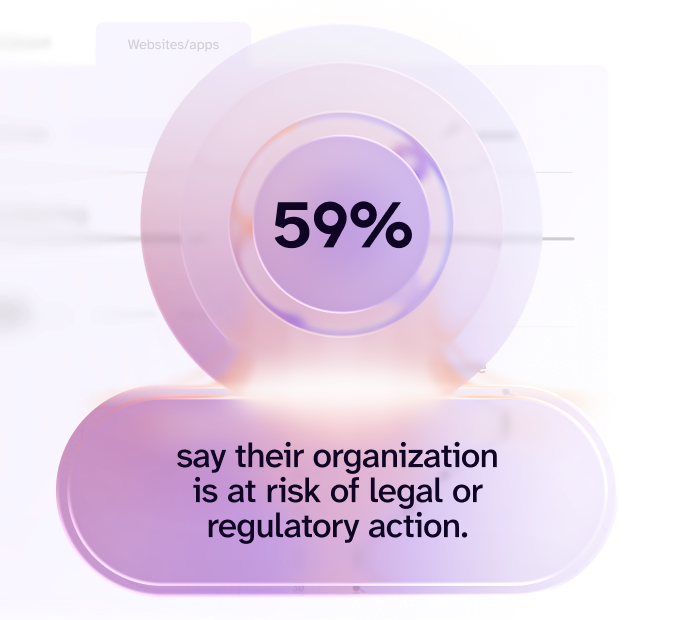
With enforcement of the European Accessibility Act (EAA) in effect and the deadline for new rulemaking under Title II of the Americans with Disabilities Act (ADA) approaching, perceived legal risk is high among digital experience professionals.
Concerned about compliance? We can help you understand and mitigate your organization’s risk.
Has proactivity
reached a plateau?
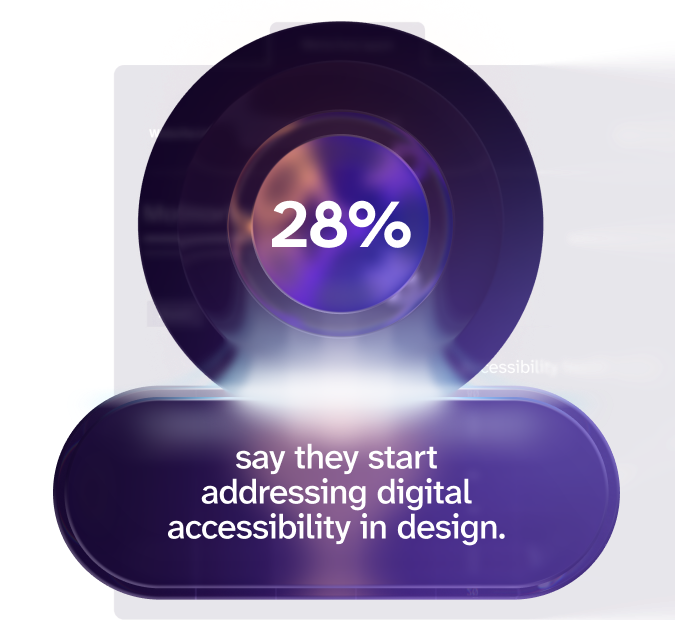
The most efficient way to address accessibility is to start early, in planning and design. But proactive accessibility adoption is stalling relative to previous years.
If your team is struggling to proactively integrate accessibility, our dedicated suite of designer tools can help.
“Addressing accessibility after the product is built is time-consuming, requiring costly re-engineering. We needed cross-collaboration—a shared commitment to embed accessibility at every phase of the software development life cycle. From there, we were much more efficient, improving our time to market with every release, and saving us money.”



Teams embrace AI
for scalable impact
Adoption of AI-powered accessibility tools is accelerating, particularly among organizations with a strong foundation for digital accessibility ready to scale their progress.
82%
say they’re incorporating AI tools into their accessibility strategies.
86%
say AI capabilities are an important factor in their decisions to purchase accessibility solutions.
57%
Respondents with a policy, budget, and accountable party for accessibility are 57% more likely to be incorporating AI.
Leadership and learning catalyze cultural change
AI powers faster progress—but technology alone isn’t a complete solution. Executive support and accessibility training are critical to programs’ success.
7x
Respondents at organizations with “highly supportive” executives are nearly seven times as likely to say accessibility helped improve revenue than those lacking executive support.
Learn how our reporting tools help you prove progress to gain leadership buy-in.
72%
Professionals with access to “highly effective” training are 72% more likely than those with ineffective training to say accessibility is part of their organization’s culture.
Ready to roll out training that works for your team?
Get the executive summary
Download a ready-to-share summary of key insights from our report to learn:
- How digital accessibility contributes to key business outcomes like customer acquisition and revenue growth.
- Trends in investment and technology, including AI adoption.
- Best practices moving the needle for accessibility programs.